
How Easements Affect Your Property Value
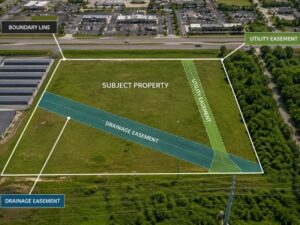
You found the perfect lot. The price looks right. The location is solid. Then the title search comes back with three easements on the property. Now what?
Easements can lower your property value, limit what you build and complicate a sale. But they don’t have to kill a deal. Knowing what you’re looking at makes all the difference.
What Is an Easement?
An easement is a legal right that lets someone else use a portion of your property without owning it. Common examples include utility lines, shared driveways and drainage channels.
An easement doesn’t mean someone owns part of your land. It means they have the right to use it for a specific purpose. That utility company running a power line across your lot? They have an easement. The neighbor who crosses your corner to reach their driveway? Probably an easement there too.
Common Types That Show Up
Utility easements let companies run power lines, water mains and sewer lines through your property. Drainage easements control where water flows across your land. In Pinellas County, these are common because of the area’s flood-prone geography. Access easements give someone the right to cross your land to reach their own. Conservation easements restrict development to protect natural areas. Pipeline easements cover gas or water infrastructure running underground.
Each type affects your property differently. Some are barely noticeable. Others can cut off a significant chunk of your buildable area.
Do Easements Lower Property Value?
Some do. Utility and drainage easements limit where you can build, which reduces a lot’s development potential. Properties with restrictive easements can sell for 5% to 25% less than comparable lots without them, depending on the easement’s size and location.
Not every easement is a problem. Some don’t affect value at all. But certain types hit hard, especially for developers who need every square foot to count.
When an Easement Hurts Value
- It cuts through a buildable area
- It prevents certain types of construction
- It’s wide enough to split the lot’s usable space in two
- It requires regular access by a utility crew
When an Easement Doesn’t Hurt Value
- Access easements on landlocked parcels can actually add value by making the land usable
- Small utility easements running along a property’s edge with no building impact
- Conservation easements that come with property tax benefits
The location of the easement matters as much as the type. A 10-foot utility easement running along a back fence line is very different from that same easement cutting through your planned building footprint.
What Developers Need to Watch For
Before buying any lot in, get a boundary survey and a title search. Both reveal easements that can affect your build plans. ALTA surveys are the most thorough option and are standard practice in commercial real estate transactions.
Pinellas County has a dense utility grid. That means easements are common, sometimes layered on top of each other. A drainage easement near a water body can block a large portion of a lot. Some easements require written approval from a utility company before you build anywhere near them.
What catches developers off guard most often is zoning setbacks and easement widths together. Add both to a smaller lot and your buildable area can shrink fast.
The ALTA Survey and Why It Matters Here
A basic boundary survey shows your property lines. An ALTA survey goes further. It identifies all easements, encroachments and rights-of-way on a property. For a development lot, that level of detail is worth the extra cost before you commit to a purchase price.
According to the American Land Title Association, nearly 36% of real estate transactions reveal a title or easement issue that must be resolved before closing. Catching it early gives you options. Catching it after closing gives you a problem.
Selling a Property With an Easement
Florida law requires sellers to disclose known easements before closing. Florida Statute 689.261 covers facts that materially affect property value, and an easement qualifies. Skipping that disclosure can void a sale and expose you to legal action.
If you’re selling a lot with easements, get a survey done before you list it. Price the property based on actual usable area, not total lot size. Buyers who understand what they’re getting are far less likely to walk away at closing.
How to Protect Yourself as a Buyer
Order a boundary survey before you close, not just a title search. Ask your surveyor to flag all recorded easements on the plat. Check whether any easement sits inside your planned building footprint. Talk to a real estate attorney if the easement affects what you intend to build. And base your offer on usable square footage, not the total lot size listed on the MLS.
These steps take time. They’re worth it.
Frequently Asked Questions
Can an easement be removed from a property in Florida?
Yes, but it’s not simple. Easements can be terminated by written agreement between both parties, by abandonment or by court order. A real estate attorney should handle any easement removal.
Do easements show up on a standard property listing?
Not always. Some sellers don’t know about every easement on their land. A title search and boundary survey will show what’s recorded in public records.
Can I build a structure on an easement?
Usually not. Most utility and drainage easements prohibit permanent structures. Building on one without permission can result in forced removal at your expense.
Does a drainage easement affect my flood insurance?
It can. Drainage easements in or near FEMA Special Flood Hazard Areas may affect how your property is rated for flood insurance. A land surveyor can help you understand the relationship between the easement and your flood zone designation.
For a free land surveying quote, call us at (727) 295-4195 or send us a message by going here.
Posted in land surveying, land surveyor |