
Land Surveying: Estimating the Cost
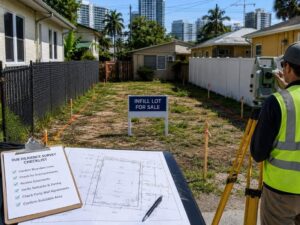
A due diligence survey on an infill lot can save a developer from a costly surprise. Narrow, older lots in built-up neighborhoods often hide problems. A quick site walk will not catch most of them.
This guide covers the survey checks that matter most before you buy an infill lot. This is true even more in areas seeing new transit and redevelopment activity.
Why Infill Lots Need a Different Due Diligence Approach
Older Records Do Not Always Match the Ground
Many infill lots sit on parcels platted decades ago. Old plats often used rough measurements. Later splits or additions can create gaps. What the paper says and what exists on site can differ. A due diligence survey confirms the real boundary. It does not rely on the old recorded one.
Tight Lot Lines Leave Little Room for Error
On a large suburban lot, a small boundary mistake barely matters. On a narrow infill lot, even a foot of error can wipe out your buildable area. It can also break a setback rule. This makes early survey work far more important than on a bigger parcel.
Key Survey Checks Before Buying an Infill Lot
Confirming the Legal Boundary Matches the Fence Lines
Older infill neighborhoods often have fences, walls, or hedges. These do not always sit on the legal line. A due diligence survey confirms if the physical boundary matches the recorded one. Do this before you plan a building footprint.
Checking for Encroachments From Neighboring Structures
Tight infill lots raise the odds that a neighbor’s shed, driveway, or overhang crosses onto your parcel. Catching this early gives you room to negotiate. It also gives you time to resolve the issue before closing.
Reviewing Easements Tied to Older Utility Lines
Infill lots often carry easements from old utility work. This work often predates current zoning rules. A survey shows where these easements sit. It also shows if they block part of your planned building footprint.
Verifying Setbacks Against Current Zoning
Zoning setback rules can change over time. An older infill lot may not meet current standards. A due diligence survey paired with a zoning check confirms what you can build under current rules.
Checking for Shared Walls or Party Wall Agreements
Some infill lots share a wall with the next building. This is common on older, tightly spaced lots. Some also have a recorded party wall agreement. This can affect renovation or new construction plans. Confirm this before you buy.
Why This Matters More Near Transit and Redevelopment Corridors
Increased Buyer Competition Raises the Stakes
Areas near new transit routes or active redevelopment see faster offers. Deadlines get tighter too. Rushing or skipping a due diligence survey to move fast can leave boundary or easement issues hidden. These often surface once construction starts.
Zoning Overlays Can Change What You Can Build
Some redevelopment corridors carry special zoning overlays. These can adjust height limits, setbacks, or density rules. A survey paired with a zoning review helps confirm if your lot qualifies for these new rules. It also shows if it still falls under older base zoning.
A Due Diligence Survey Checklist for Infill Lots
- Confirm current boundary lines against all physical fences and structures
- Check for encroachments from neighboring buildings, driveways, or overhangs
- Review all recorded easements tied to utilities or shared access
- Confirm current setback and zoning requirements for the parcel
- Check for any party wall agreements tied to shared structures
- Compare buildable area on paper against the survey’s actual measurements
What This Means for Your Next Infill Purchase
A due diligence survey protects your buildable area. It protects your timeline too. It protects your budget. Skipping this step to move faster on a hot deal often costs more later. This happens once construction plans hit an unresolved boundary or easement problem.
Frequently Asked Questions
How is a due diligence survey different from a standard boundary survey?
A due diligence survey often includes the same boundary work as a standard survey. Developers usually pair it with zoning checks, easement research, and encroachment review. This extra work supports buying decisions before a purchase closes.
Can an infill lot fail to meet current zoning even if it was legally built decades ago?
Yes. Many older lots are legal nonconforming. This means they were fine under old rules, but they may not meet current setback or lot size rules if built today. A survey paired with a zoning check shows what applies to your parcel.
Do party wall agreements automatically transfer to a new owner when an infill lot is purchased?
In many cases, yes. These agreements are often recorded against the property. They are not tied to a specific owner. Confirming this during due diligence helps avoid surprises after closing.
Why do infill lots near transit corridors sometimes carry different zoning rules than nearby parcels?
Some redevelopment corridors use zoning overlays. These can adjust height, density, or setback rules to encourage new construction near transit access. These overlays can differ block by block, so it is important to confirm which rules apply to your specific lot.
Should a developer order a due diligence survey before or after making an offer on an infill lot?
Many developers order the survey during the due diligence period after an offer is accepted. This usually happens under a contract contingency. It lets them renegotiate or walk away if the survey finds a serious problem.
For a free land surveying quote, call us at (727) 295-4195 or send us a message by going here.
Posted in land surveying, land surveyor | Tagged Due Diligence Survey