
Buying a Former Car Dealership? Start With Due Diligence
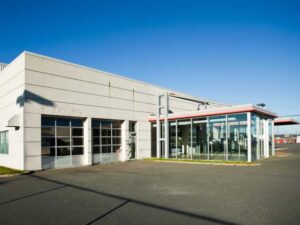 A due diligence survey gives commercial buyers and developers a clear picture of what they’re buying before the inspection period runs out. The takeaway is simple. Order the survey early, read it alongside the title commitment and environmental reports, and treat the old dealership layout as a starting point, since the next use will probably need a different one. Survey scope and timing vary by lender, title company, and project, so confirm requirements as soon as the contract is signed.
A closed car dealership looks like an easy purchase. Big lot, wide road frontage, and a building already sitting on a busy corner. Those same features hide problems that never show up on a listing sheet, like use restrictions on the deed, a parking lot that drains toward the service bays, or decades of floor drains nobody mapped.
Reviewing Property Boundaries and Recorded Land Restrictions
Start with the lines and the paperwork. A boundary survey confirms where the property lines run, how much land is really there, and whether anything built on site crosses a line. Dealerships often grow in pieces over the years, so a buyer may actually be acquiring several parcels that were assembled at different times.
Recorded restrictions deserve a close read. The title commitment lists documents recorded against the property, which can include easements, covenants, and deed restrictions. Some sellers record limits on future use of a dealership site, and older covenants may restrict signage, building height, or access. The surveyor plots the restrictions that can be mapped, and your attorney should review the rest.
Using an ALTA Survey to Document Dealership Site Improvements
An ALTA survey is a detailed commercial survey prepared to national standards set by the American Land Title Association and the National Society of Professional Surveyors. Lenders and title companies often ask for one because it ties the boundary, easements, and improvements to the title commitment in a single document. Optional items, listed in what’s called Table A, let the buyer add details like parking counts, utility locations, and building measurements.
Dealership sites carry more physical features than most retail lots. Each one can affect title coverage, redevelopment cost, or both. A due diligence survey on this kind of property commonly shows:
- Showroom, service building, car wash, and detached canopies
- Display pads, light pole bases, and pylon sign foundations
- Fenced inventory storage and security gates
- Visible utility structures, vents, and fill ports
- Encroachments onto neighboring land or the right-of-way
Pick Table A items based on your plans for the site. A buyer keeping the dealership use needs different detail than one planning to tear it down. Ask your lender and title company which items they require before the surveyor starts, so you don’t pay for a second trip.
Evaluating Vehicle Access, Parking Areas, and Internal Circulation
Dealerships are built around moving a lot of vehicles. That usually means wide driveways, several curb cuts, and big open paved areas laid out for display rows and car carriers. The survey shows where those driveways sit, how wide they are, and whether each one has recorded access to a public road.
The next use changes how the site needs to work. A restaurant, medical office, or self-storage project needs a very different traffic pattern than a car lot. Existing curb cuts may need changes if the site is redeveloped, depending on the road agency and project. Check whether any access relies on a shared driveway or a neighbor’s easement before assuming it will stay.
Parking counts deserve attention too. Striped spaces on a dealership rarely reflect what a new use would need under current code. Having the surveyor count and map the existing stalls gives your engineer a real baseline.
Identifying Service Bay Drainage and Potential Environmental Concerns
Service departments are where environmental questions usually start. Repair bays commonly have floor drains, trench drains, and oil-water separators, and older sites may have had underground tanks for waste oil or fuel. In-ground hydraulic lifts can also hold fluid below the slab.
The survey won’t tell you whether soil is contaminated, since that’s the job of an environmental consultant. It can locate visible drainage structures, vent pipes, fill ports, and monitoring wells, and show where storm drains on the paved lot discharge. That map helps the environmental professional preparing a Phase I Environmental Site Assessment focus on the right areas. Share the survey with them as soon as it’s ready.
Drainage matters beyond the bays. Large paved lots shed a lot of water, and older dealerships may have been built before current stormwater rules. Topographic data shows where water flows and where it pools, which feeds into any future permit review.
Assessing Site Conditions for Future Commercial Redevelopment
Most buyers of former dealerships plan to change the property rather than reuse it as-is. That’s where topographic data, flood zone information, and utility locations become planning tools. A topographic survey maps ground elevations, so the engineer can judge grading costs and how a new layout will drain.
Ask the surveyor to note the flood zone shown on the current FEMA map and any recorded easements that would block new buildings. Utility locations show where water, sewer, and electric service enter the site, which affects where a new building can go. Zoning setbacks and parking rules vary by municipality and property type, so pair the survey with a zoning review before you settle on a concept.
Old site features add cost. Pylon sign foundations, light pole bases, car wash equipment pits, and thick display slabs all have to come out before new construction. Seeing them mapped helps you price demolition before the inspection period ends.
Frequently Asked Questions
What is a due diligence survey?
It’s a survey ordered during a purchase to document a property’s boundaries, easements, improvements, and site conditions. For commercial deals, it’s often an ALTA survey with selected Table A items. Buyers use it to spot problems before closing or before the inspection period ends. Lenders and title companies may rely on it too.
Does a surveyor check for environmental contamination?
No. A surveyor maps visible features like floor drains, vent pipes, fill ports, and monitoring wells, while contamination is assessed by an environmental professional. Most commercial buyers order a Phase I Environmental Site Assessment for that purpose. Sharing the survey with the environmental team helps them target the right spots.
How long does a survey take for a dealership property?
Timing varies by site size, number of parcels, available records, and the Table A items requested. Larger sites with many improvements take longer to measure and draft. Title review and busy seasons can add time as well. Order the survey as soon as the contract is signed so it fits inside your inspection period.
For a free land surveying quote, call us at (727) 295-4195 or send us a message by going here.
Posted in ALTA survey | Tagged ALTA survey