
Can a Surveyor for Fence Replacement Help Avoid Property Line Problems?
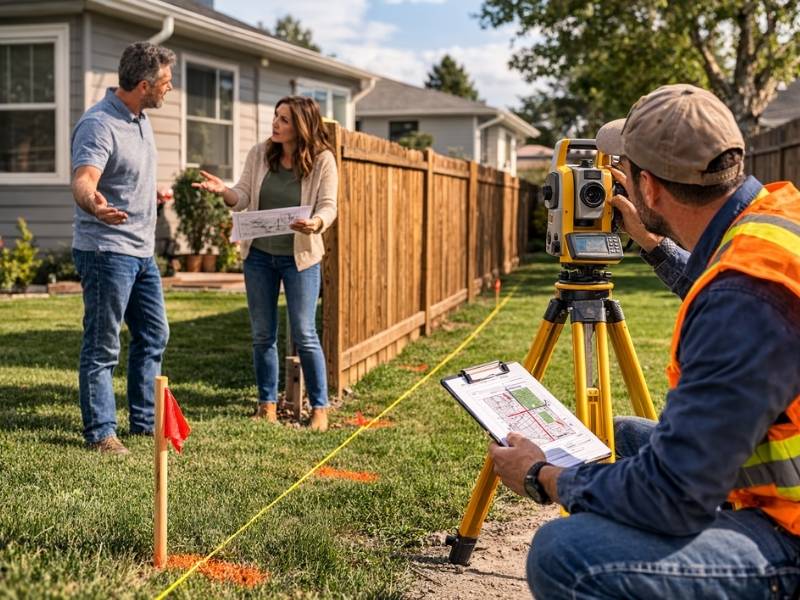
Fence disputes are one of the most common neighbor conflicts. And almost every one of them starts the same way: someone assumed they knew where the property line was.
Hiring a surveyor for fence work before you replace or install a fence is the move that saves you from tearing it down later. This article breaks down exactly how a survey protects developers and property owners from costly mistakes.
Why Property Line Problems Happen During Fence Replacement
Replacing a fence sounds simple. Pull out the old posts, put in new ones. But that old fence may have been built wrong from the start.
A lot of residential and commercial parcels have boundary monuments that were never properly set or have shifted over time. The original fence may have been placed by a contractor who eyeballed the line. Years later, that becomes your legal problem when the new fence goes up in the wrong spot.
Pinellas County also has a high volume of older subdivisions with irregular lot shapes. Corner lots, flag lots and parcels with curved boundaries are common. None of those are easy to estimate by eye.
What a Surveyor for Fence Replacement Actually Does
Locating the True Property Line
A licensed surveyor goes into the public record first. They pull the deed, the recorded plat and any prior surveys on file. Then they go to the field and locate existing boundary monuments, or set new ones where they’re missing.
The result is a staked line you can follow when setting fence posts. No guessing. No “I think it’s about here.”
Identifying Encroachments Before They Become Your Problem
If the existing fence already encroaches on a neighbor’s property, you need to know that before you replace it. Rebuilding a fence in the same location as an encroaching one can be treated as a new violation under Florida property law.
A survey catches this before the first post goes in the ground.
Checking Easements Along the Fence Line
Utility easements and drainage easements run along property lines all over St. Petersburg. Pinellas County has extensive stormwater infrastructure, and easements for that system often sit right where a fence would go.
Building a fence inside an easement area can get it removed at your expense. The utility or county doesn’t ask nicely. A surveyor identifies these easement boundaries and shows you exactly where your fence can and can’t go.
The Cost of Skipping the Survey
Some developers skip the survey to save a few hundred dollars. It’s a bad trade.
Fence encroachment disputes in Florida can lead to litigation, forced removal and damages. A boundary survey in Pinellas County typically runs between $400 and $900 for a residential lot, depending on size and complexity. A property dispute attorney costs multiples of that per hour.
Beyond legal costs, St. Petersburg requires a fence permit for most new fence installations. The city’s permitting process may ask for a site plan showing the fence location relative to property lines. A survey gives you that documentation.
When Developers Specifically Need a Survey Before Fencing
Fence surveys matter most in these situations:
- You’re replacing a fence along a shared boundary with a commercial or multi-family neighbor
- The existing fence line looks inconsistent with what the plat shows
- You’re fencing a corner lot where the right-of-way line may not be where it looks
- The property hasn’t had a survey done in more than 10 years
- You’re subdividing or replatting and need accurate boundary data anyway
If any of these apply to your project, order the survey before the fence contractor shows up.
Fence Rules That Affect Your Survey Needs
St. Petersburg has its own fence regulations under the city’s Land Development Regulations. Height limits, material requirements and setback rules vary by zoning district.
The setback issue is where surveyors and fence rules connect directly. If your zoning requires a fence to sit a certain distance inside the property line, you can’t measure that setback accurately without knowing where the line actually is.
Some districts also have visibility triangle requirements at intersections. These restrict fence height and placement near corners for safety. A surveyor can plot these triangles relative to your boundary so you know exactly what’s buildable.
Frequently Asked Questions
Do I need a survey every time I replace a fence?
Not always. If you have a recent survey on file, the monuments are still in place and the existing fence matches the survey, you may be able to proceed without a new one. When any of those conditions don’t apply, get a survey first.
Can my fence contractor find the property line without a surveyor?
No. A fence contractor can estimate or reference old markers, but only a licensed land surveyor can legally locate and certify a property boundary in Florida. An estimate from a contractor carries no legal weight in a dispute.
What happens if my new fence accidentally crosses the property line?
Your neighbor can demand removal at your cost. If they don’t act quickly, the situation can sit and create future adverse possession claims under Florida law. Either way, it’s an expensive problem that a survey prevents.
How long does a fence survey take?
Most boundary surveys for standard residential or small commercial lots in Pinellas County take one to three weeks from order to completed stakes, depending on the surveyor’s workload and how complex the title history is.
Does the city of St. Petersburg require a survey for a fence permit?
The city may require a site plan showing fence placement relative to property lines as part of the permit application. A boundary survey is the most reliable way to produce that documentation accurately. Check with the St. Petersburg Development Services department for current permit requirements on your specific project.
For a free land surveying quote, call us at (727) 295-4195 or send us a message by going here.