
Survey Property Line Before Installing a Shared Driveway
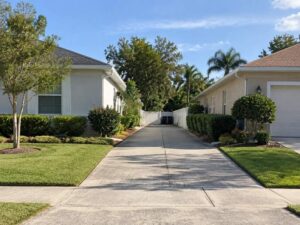
A shared driveway sounds simple. Two neighbors split one strip of pavement and both get access. Then a question comes up. Whose land is it on, and who pays to fix it? Without clear answers, a shared driveway can turn a good relationship into a long dispute.
The fix starts before any paving. You need to survey property lines to know exactly where the boundary falls. That tells you whose land the driveway sits on and what rights each side has. Getting this settled early keeps the project smooth and the peace intact.
Why Shared Driveway Projects Require Clear Property Boundary Information
A shared driveway crosses or sits along a property line by design. That makes the exact location of the line the most important detail. If the boundary is off by even a few feet, the whole plan can shift. One neighbor could end up with pavement on land they do not own.
Many owners assume they know where their line runs. They point to a fence, a hedge, or an old edge of gravel. These markers are often wrong. A fence can sit inside or outside the true line by a wide margin. Only a survey shows where the boundary actually falls.
Clear boundary information protects both neighbors. It shows who owns each part of the driveway and the ground under it. It also sets the base for any agreement about use and upkeep. In older St. Petersburg neighborhoods, where lots sit close and driveways are tight, this clarity heads off trouble before it starts.
The Boundary Questions That Should Be Resolved Before Driveway Construction
Before the first load of gravel arrives, several questions need firm answers. A survey provides the facts to settle each one. Skipping this step invites conflict once the driveway is in place. It is far easier to sort these out on paper first.
The key questions to resolve include the following:
- Where does the true property line fall between the two parcels?
- Whose land will the driveway sit on, and how much on each side?
- Are there setbacks that limit how close the driveway can go to a line?
- Does either parcel have an existing easement for access?
- Where do utilities and drainage run beneath the planned driveway?
Each answer shapes the design and the agreement. If the driveway sits mostly on one lot, the other neighbor needs a legal right to use it. That right usually comes through an easement, which the survey helps define. Confirming these points early prevents a rebuild later.
Local rules can affect the plan too. Setbacks and driveway standards vary by city, zoning, and lot type. A survey shows where your line sits so you can apply those rules correctly and provide accurate permit site plans when required. Confirm the local requirements before you build, since they can change what is allowed.
How Property Line Surveys Identify Ownership, Access, and Improvement Limits
A property line survey does three main jobs for a shared driveway. First, it confirms ownership by marking the true boundary. The surveyor researches the deeds and plats, then measures the lines on the ground. This shows exactly whose land each part of the driveway sits on.
Second, the survey clarifies access. A shared driveway only works if both neighbors have the legal right to use it. The survey helps map where that shared access needs to run. It gives the exact location and width for an access easement, if one is needed. That turns a handshake deal into a clear, recordable right.
Third, the survey shows the limits on improvements. It marks setbacks, easements, and other constraints that affect where you can pave. Some areas near the line may be off-limits for a hard surface. The survey reveals these limits so the design stays within the rules. Building with this knowledge avoids forced changes down the road.
Easements, Agreements, and Site Conditions That Affect Shared Driveway Planning
An easement is the legal backbone of most shared driveways. It is a recorded right that lets one party use part of another’s land for a set purpose. For a shared drive, it grants access across the boundary. Without one, a neighbor could lose the right to use the driveway when a property sells.
A written agreement usually pairs with the easement. It spells out how the driveway is shared and maintained. Who repaves it, who plows it, and how costs get split all belong in that document. The survey supports the agreement by fixing the exact location and dimensions everyone is agreeing to. That precision prevents future arguments over what was meant.
Site conditions matter to the plan as well. The survey and related fieldwork show the slope, drainage, and utilities on the shared strip. A utility easement may also affect where you can pave or place other improvements. A driveway that ignores drainage can flood one neighbor’s yard. One that crosses a utility line can cause problems during construction. These easement and agreement rules can vary by property, title company, and municipality, so confirm the details early. Knowing the site conditions helps the design work for both parcels.
Preventing Future Property Disputes With Accurate Survey Documentation
Most driveway disputes trace back to unclear boundaries. A neighbor claims the pavement is on their land. Another refuses to pay for a repair. Accurate survey documentation stops these fights before they begin. It gives both sides a certified record to rely on.
The survey creates a clear picture of the boundary and the shared rights. That record supports the easement and the maintenance agreement. If a question ever comes up, the documents provide the answer. This proof is valuable long after the driveway is built, especially when either home changes hands.
Buyers, lenders, and title companies also value this documentation. They want to see that the shared driveway has clear ownership and recorded rights. A solid survey and agreement give them that confidence. Confirm your survey needs early, especially when a closing or permit depends on the timing. Good documentation at the start is the simplest way to keep a shared driveway trouble-free for years.
For a free land surveying quote, call us at (727) 295-4195 or send us a message by going here.
Posted in land surveying, land surveyor | Tagged boundary survey