
What to Do With Your Lot Survey After Closing
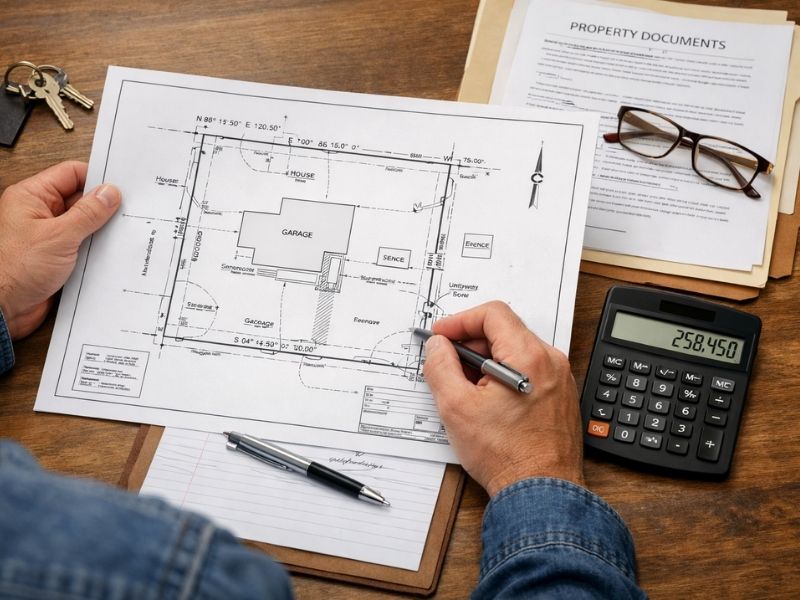
A lot survey shows up at closing, gets signed off, and then disappears into a filing cabinet. Most developers treat it like a receipt. They shouldn’t.
That document is a legal record of your property. It shows boundaries, easements, encroachments, and physical features tied to your lot. Once closing is done, it doesn’t stop being useful. It becomes a working tool you’ll reach for again and again throughout the life of that property.
Here’s what to do with it.
What Your Lot Survey Actually Contains
Before you can use it, you need to know what’s on it.
A lot survey includes the exact dimensions of your lot, the location of all boundary lines, and any easements that cross the property. It will show structures already on the lot, where they sit relative to the property lines, and whether anything encroaches on adjacent parcels.
It also shows the lot’s legal description. That description ties the survey to public records and the deed. If those ever conflict, the survey is the document that gets pulled into the room.
Some lot surveys include flood zone notations and setback lines depending on local code. Not all do. Know what yours covers and what it doesn’t.
Why Developers Should Store It the Right Way
Losing a lot survey doesn’t mean losing the data forever. You can usually order a copy from the surveying firm or pull records from the county. But that takes time and money. Time you won’t have when a permit is due or a contractor is waiting on-site.
Store it in two places.
Digital vs. Physical Storage
Scan the document at full resolution. A photo taken on a phone is not enough. The lines, notations, and symbols on a survey are precise. A blurry scan creates problems when someone needs to read measurements or verify a detail under pressure.
Save the digital copy to a cloud folder tied to the property address. Label it clearly. Keep a hard copy in a physical file organized by property. If you manage multiple properties, this system becomes non-negotiable.
One more thing: note the name and contact information of the licensed surveyor who completed it. If questions come up later, you want to go back to the same professional who did the original work.
When You Will Need It Again
This is where most developers get caught off guard. They assume the lot survey is a one-time document for closing. It isn’t.
Permit Applications
Most local building departments ask for a copy of your lot survey when you pull a permit. They use it to verify setbacks, confirm the lot dimensions match what you’re proposing to build, and check that no easements conflict with your plans. Submit a clean, legible copy. A bad scan will slow the process down.
Contractor Work and Setbacks
Contractors make assumptions. Some of those assumptions turn into violations.
Before any site work begins, share the lot survey with your contractor. Show them where the boundary lines fall. Point out any easements. If a contractor puts a structure inside a setback or crosses an easement line, you’re the one who deals with the consequences. That means fines, forced removal, or legal disputes with adjacent property owners.
The lot survey is your first line of protection. Use it before work starts, not after something goes wrong.
Resale and Title Transfer
When you sell, the buyer’s lender and title company will ask about the survey. A current, sealed lot survey speeds up the title review. If the survey is old and conditions on the lot have changed, you may need a new one. But having the original gives the new surveyor a baseline to work from, which saves time and reduces cost.
Buyers and their attorneys also use the lot survey to verify that what’s described in the purchase agreement matches what’s physically on the lot. Discrepancies create delays. A clean, accessible survey prevents most of them.
How to Read the Key Details on Your Lot Survey
You don’t need to be a licensed surveyor to get useful information from the document. Focus on four things.
Boundary lines. These are the edges of your property. Check that they match what you understood at closing.
Easements. These are sections of your lot that another party has the legal right to use or cross. A utility easement, for example, means you can’t build over that area. Know where they are before you plan anything.
Encroachments. If a neighboring structure crosses onto your lot, or if something on your lot crosses into a neighboring parcel, the survey will flag it. Encroachments that weren’t resolved at closing become your problem once you own the property.
Setback lines. These show how close to the boundary lines you can legally build. Every jurisdiction has different rules. The survey will often show them, but always cross-check with local code.
What to Do If Your Lot Survey Has Errors
Errors on a lot survey are not common, but they happen. A mislabeled boundary, an incorrect dimension, or a missing easement notation can create serious problems.
If you spot something that doesn’t match the deed, the purchase agreement, or what you physically see on the lot, contact the licensed surveyor who signed the document. Don’t try to correct it yourself or assume it’s a minor clerical issue.
Surveyors carry professional liability for their work. If the error is theirs, they’re responsible for correcting it and issuing an updated document. Get that correction in writing and store it with the original.
If the surveyor is no longer available, hire a new licensed professional to review the original document and assess whether a new survey is needed.
Frequently Asked Questions
How long is a lot survey valid?
A lot survey doesn’t technically expire, but lenders and title companies often require a survey dated within a certain period, typically five to ten years. If conditions on the lot have changed, a new survey may be required regardless of age.
Can I use the seller’s lot survey instead of ordering a new one?
In some transactions, yes. The seller’s survey can be reviewed and re-certified by a licensed surveyor for the new buyer. Whether that’s acceptable depends on the lender, title company, and how much time has passed since the original survey.
What’s the difference between a lot survey and a boundary survey?
A lot survey is used for properties in a recorded subdivision. A boundary survey is used for properties not part of a subdivision, or when precise legal boundary determination is needed. They serve different purposes and are not interchangeable.
Do I need a new lot survey every time I pull a permit?
Not always. Many jurisdictions accept an existing survey as long as it’s current and no major changes have been made to the lot. Check with your local building department before assuming the old one is enough.
What if I can’t find my lot survey after closing?
Contact the title company that handled your closing. They keep copies of all documents from the transaction. You can also reach out to the surveying firm directly or check your county’s public records, where surveys are often filed.
For a free land surveying quote, call us at (727) 295-4195 or send us a message by going here.
Posted in land surveying, land surveyor |